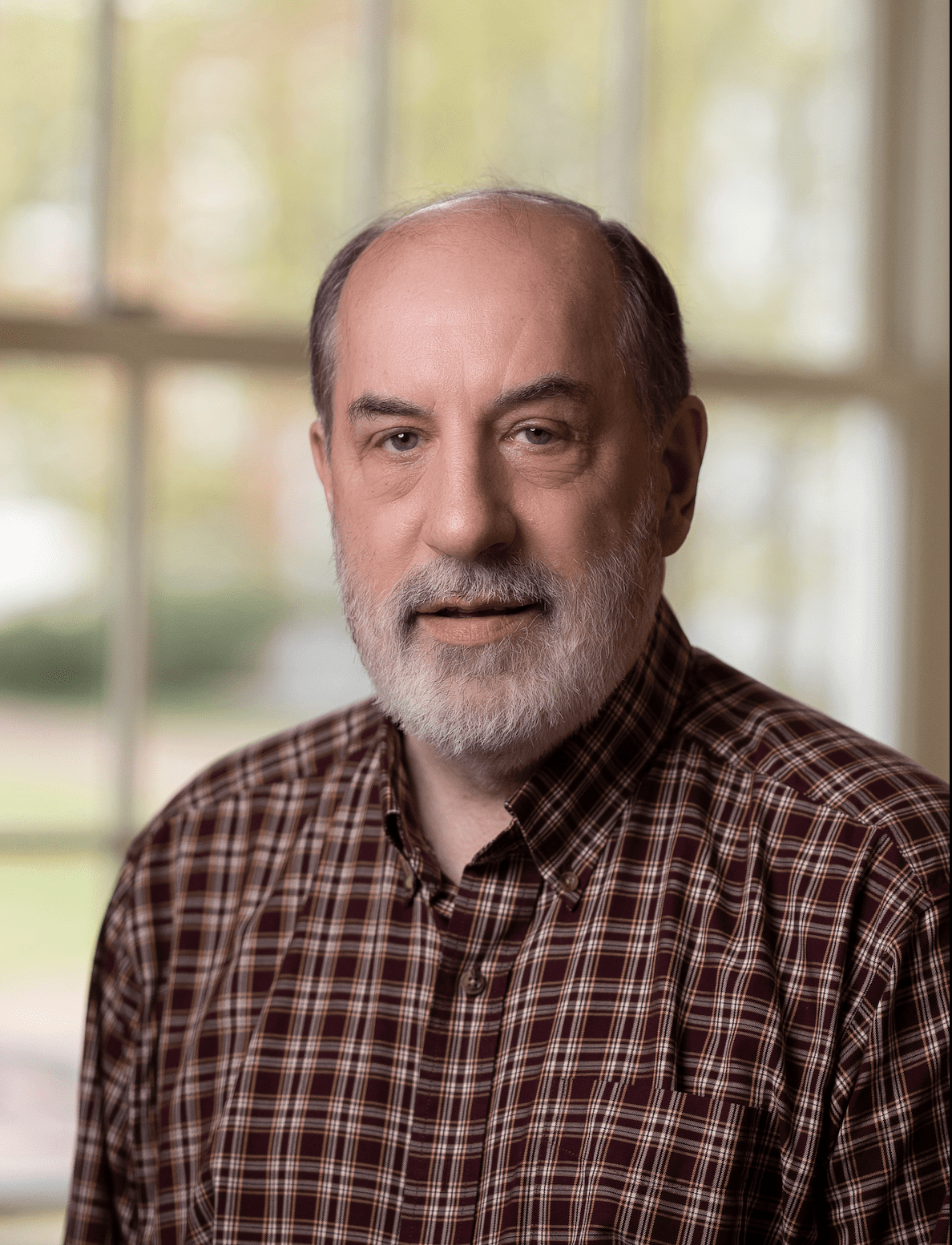
Laurence M. Ball
Professor
Contact Information
- [email protected]
- Curriculum Vitae
- Wyman Park Building 566
- By appointment
- 410-516-7605
Research Interests: Macroeconomics
Education: PhD, MIT
Laurence Ball is Professor of Economics at Johns Hopkins University. He is also a Research Associate at the National Bureau of Economic Research and a consultant for the International Monetary Fund. He has previously been a Visiting Scholar at a number of central banks, including the Federal Reserve, the European Central Bank, the Bank of Japan, the Bank of England, and the Reserve Bank of New Zealand. His research topics include unemployment, inflation, fiscal and monetary policy, and financial regulation, and he is the author of The Fed and Lehman Brothers: Setting the Record Straight on a Financial Disaster (Cambridge University Press, 2018).
Recent Book
- "The Fed and Lehman Brothers: Setting the Record Straight on a Financial Disaster", Cambridge University Press, 2018.
Recent Papers
- "Did the U.S. Really Grow Out of Its World War II Debt?" (with Julien Acalin), NBER Working Paper, August 2023
- "Weighted Median Inflation Around the World: A Measure of Core Inflation" (with Carlos Carvalho, Christopher Evans, and Luca Antonio Ricci), IMF Working Paper, February 2023
- "Understanding U.S. Inflation During the COVID Era" (with Daniel Leigh and Prachi Mishra), Brookings Papers on Economic Activity forthcoming
- "Measuring U.S. Core Inflation: The Stress Test of COVID-19" (with Leigh, Mishra, and Spilimbergo), NBER Working Paper, December 2021
- "Hysteresis in Unemployment: Evidence from OECD Estimates of the Natural Rate" (with Joern Onken), International Finance November 2022
- "Market Power in Neoclassical Growth Models" (with N. Gregory Mankiw), Review of Economic Studies May 2022
- "Liquidity Risk at Large U.S. Banks", Journal of Law, Finance, and Accounting forthcoming
- "A Phillips Curve for the Euro Area" (with Sandeep Mazumder), International Finance, Spring 2021
- "The Nonpuzzling Behavior of Median Inflation" (with Sandeep Mazumder), Central Bank of Chile volume, 2020
- "A Phillips Curve with Anchored Expectations and Short-Term Unemployment" (with Sandeep Mazumder), Journal of Money, Credit and Banking, March 2018.
- "Okun’s Law: Fit at 50?", Journal of Money, Credit and Banking, October 2017.
- "Understanding Inflation in India" (with Anusha Chari and Prachi Mishra), December 2016.
- Comment on Kiley and Roberts, "Monetary Policy in a Low Interest Rate World.", 2017.
- "Ben Bernanke and the Zero Bound", Contemporary Economic Policy, January 2016.
- "What Else Can Central Banks Do?" (with Joseph Gagnon, Patrick Honohan, and Signe Krogstrup), International Center for Monetary and Banking Studies, September 2016.
- "Comment on 'Inflation and Activity,' by Blanchard, Cerutti, and Summers", August 2015.
- "Monetary Policy for a High-Pressure Economy", Center on Budget and Policy Priorities, March 2015.
- "Long Term Damage from the Great Recession in OECD Countries", European Journal of Economics and Economic Policies, 2014.
- "Fiscal Policy and Full Employment", April 2014.
- "Unemployment in Latin America and the Caribbean" (with Nicolás De Roux and Marc Hofstetter), Open Economies Review, July 2013.
- "The Case for Four Percent Inflation", Central Bank Review, May 2013.
- "Short-run Money Demand", Journal of Monetary Economics, November 2012.
- "Inflation Dynamics and the Great Recession" (with Sandeep Mazumder), Brookings Papers, Spring 2011.
- The Performance of Alternative Monetary Regimes, Handbook of Monetary Economics, 2010
- "Policy Responses to Exchange-Rate Movements", Open Economies Review, March 2010.
- "Hysteresis in Unemployment: Old and New Evidence", Boston Fed volume, October 2009
Non-Technical Writings
- "Reassessing the fall in US public debt after World War II" (with Julien Acalin), Vox EU October 2023
- "Understanding U.S. Inflation In the Covid Era" (with Daniel Leigh and Prachi Mishra), Vox EU November 2022
- "U.S. Inflation: Set for Take-off?" (with Gopinath, Leigh, Mishra, and Spilimbergo), Vox EU, May 2021
- "A Phillips Curve for the Euro Area" (with Sandeep Mazumder), Vox EU, February 2020
- "Book Review: Firefighting by Bernanke, Geithner, and Paulson", National Association for Business Economics. July 2019
- "Ten years on, the Fed's failings on Lehman Brothers are all too clear", the Guardian. September 2018.
- "Understanding inflation in India" (with Anusha Chari and Prachi Mishra), Vox EU. April 2017.
- "What else can central banks do?" (with Joseph Gagnon, Patrick Honohan, and Signe Krogstrup), Vox EU. September 2016.
- "The Fed and Lehman Brothers: A new narrative", Vox EU. August 2016.
- "Understanding Recent US Inflation", Vox EU. January, 2015.
- "The Great Recessions's Long-Term Damage", Vox EU. July 2014.
- "The Case for Four Percent Inflation," Vox EU. April, 2013.
- "The Myth of Jobless Recoveries", January 2013.
- "Jobs and growth are still linked (that is, Okun's Law still holds)", January 2013.
- "Ben Bernanke and the zero bound", February 2012.
- "Painful Medicine", September 2011.
- Testimony on "Federal Debt and the U.S. Economy", Joint Economic Committee, September 2011
- "The Unemployment Crisis", January 2011.
- "Testimony on Federal Reserve policy, House Committee on Financial Services", March 2010.
Textbooks
- "Money, Banking, and Financial Markets", 2nd ed., Worth Publishers, 2011.
- "Macroeconomics and the Financial System" (with N. Gregory Mankiw), Worth Publishers, 2011.
Litigation
Economics 605 -- Advanced Macroeconomics:
This is a graduate course covering selected topics in macroeconomics. These include nominal rigidities, dynamic-consistency theories of inflation, inflation inertia and the costs of disinflation, monetary policy, costs and benefits of price stability, benefits of output stabilization, alternative policy rules, measuring inflation, unemployment, efficiency-wage theories, the behavior of the NAIRU, macro in middle-income countries, high inflation and stabilization, currency crises.